
That’s a long time ago! I actually started as a technical apprentice at a lock manufacturer, and the department I enjoyed most was Product Engineering. However, I was asked to move over to tooling and I also had a couple of years designing and detailing jigs, fixtures, mould and press tools. It was incredibly useful to learn what is required for efficient design for manufacture to complement the product development skills I already had.
I started as a freelancer about 36 years ago; it’s from that work that HD was eventually formed. I’d always wanted to create and grow a company, so when our eldest daughter was born 25 years ago it just felt the time was right to form HD as a limited company. I realised that my family was reliant on my income so I should spread the risk by employing people to do the work in case I was ill etc. I was completely naive, so I wish I knew then what I know now. I would definitely tackle things differently and there’s been a lot of hard learning along the way. I never imagined HD would be the company it is now, working in Pharma and MedTech whilst our clients would be mainly international.
Back then our local area had a lot of manufacturing businesses, especially in automotive and aerospace, so a lot of design and engineering work was in those sectors. Those industries were the core of our work, but being a consultancy meant work came from a very wide range of companies, I particularly enjoyed our projects in healthcare/mobility and security too. This was because a lot of the automotive and general manufacturing work was done in the traditional 2D way on paper and AutoCAD, whereas for the latter two sectors work was in 3D CAD – which was much more interesting to me. It was faster for designs to come to life and much easier to check designs for issues with functionality, clashes and general design robustness. I started using Mechanical Desktop but soon swapped to SolidWorks as one of our clients, Sunrise Medical, wanted work in SW98.
I worked mainly from home initially, which was unusual back then, going to the client’s site to collaborate and collect work etc. You must remember that this was during the infancy of the early internet, most websites were academic institutions or large corporations embracing the internet. Most data and file transfers were on discs because dial up was so slow and USB sticks were yet to be useful; most work had to be posted or hand delivered. Drawings produced were typically at A0 and A1 size on paper, so I invested in a huge plotter so work could be delivered to customers and their suppliers. It was over £2000 which was a lot of money at the time. However, it did create opportunities to bring in work, and delivering full-sized plots removed a lot of the barriers of me working at home. The client still received their expected deliverables in a format they were used to; it was a valuable lesson in meeting clients’ needs and expectations.
It wasn’t possible to find work on the internet, so it was done using newspapers, journals, yellow pages and calling people up to ask for opportunities. By September 2001 business was going well with a strong pipeline of large projects, so I signed a contract for offices and took the plunge to employ someone. A few days later 9/11 happened which was obviously a huge tragedy, but I didn’t expect it to affect me personally. The strong pipeline I had built consisted mainly of aerospace test rig design projects, for both military and commercial aircraft. All the commercial projects went on hold; military work was delayed too. It meant there was almost no paid work for the first 6 months in our new offices. I recall all my savings and buffer being spent on premises, equipment and wages – it was very hard to see that money disappear – (See How to survive ‘Exceptional Times’ in business!).
For those 6 months I invested a lot of the time developing our processes and systems together with building a library of custom 3D components. Once the hold-ups were removed, it would allow us to plough through work more accurately and much faster than I’d been able to do before. It taught me valuable lessons about investing wisely, utilising robust systems and processes, even when there is no immediate benefit. When orders started to arrive, we were ready to move swiftly – it meant we started to claw back those early losses and over time managed to rebuild our finances.
It wasn’t long before military work started to flow too so more defence and security projects could be found. We geared up our marketing and systems to tap into the work required. We soon won a large project to develop a systems test rig for a stealth fighter, which was incredibly challenging because of the scale, complexity and the introduction of work being required in CATIA v5. Fortunately, the project went very well, and I can still vividly remember the day it was completed. A lot of senior and very talented people stood around to see the rig system controlling the weapons bay doors as balloons were bounced under control by the actuation system. It was a proud moment for all of those involved. I recall thinking, maybe that was a one-off lucky success so we should pivot to more numerous, lower value, product design projects needing a thorough development process with multiple prototype iterations rather than one shot, right first-time projects.
Although test rig and general mechanical work are extremely interesting, it’s very high risk and in my opinion, completely undervalued. From a business and money making perspective, designing special purpose equipment meant it was not possible to make enough profit to adequately invest in developing the company and our staff. It was time to return to developing new products, where thorough development and engineering would be more valued as customers could proportionally make more money from investing in HD’s work.
I was lucky to meet a guy called Max King who was one of the sharpest and most perceptive business advisors I’ve ever met. He could walk into our offices, look around for a few moments and tell if we were busy, making money and amazingly if people in the team were good for the business. It was a remarkable skill, and he was always spot on with his assessments. I owe him and his colleagues from the BIC a great deal, they were all incredible people without whose help we would not have survived.
Another incredibly helpful organisation was MAS – The Manufacturing Advisory Service. This was a group of consultants who specifically advised manufacturers, their work was very focused on improving performance of the sector. It was they who had the foresight to create a Marketing for Manufacturers initiative. Taking part in the course and working with their consultants made a huge difference to my approach as until that point, I thought like a typical engineer, so didn’t see the value in effective sales and marketing.
From within the BIC and MAS network I was introduced to a consultant, Mike Gulliford, who had much of Max’s perception but also a strong appreciation of engineering businesses. He helped me to really understand that it doesn’t matter how good your core skills and services are, your business will not survive if no one knows about it, or you don’t make enough money to keep reinvesting. His involvement with HD has been crucial and I still work closely with him to this day.
We’ve had some excellent staff along the way, lovely people and incredibly talented. I gain a lot of satisfaction seeing people develop and grow with the company. It’s inevitable that some will move on and that’s great to see. I am still in touch with many of them, it’s always good to hear they are doing well. However, some were poached by unscrupulous clients who could see how well they had been developed at HD. It’s almost impossible for small start-up businesses to compete against wealthy companies who don’t invest in developing their own people.
It took me a while to understand that everyone is different, personalities, attitudes and experiences are never the same. Once I realised that, it became possible to build a strong group of designers and engineers who work very well with their commercial colleagues. It’s not easy to create this culture as there’s often not enough respect for the technical and financial needs of projects so it’s difficult for design companies to be successful over the longer term. The current group is a pleasure to work with and they are a first-class team who are excellent with our customers. They have created a nice culture where they work hard, but there is still time for a little banter and support for when people need it. I’m incredibly proud and excited to see what they can do as they all develop to take advantage of the opportunities at HD and the sectors we work in. They’ve proven they can be highly innovative, so it feels good that HD provided the opportunities to complete some incredible projects and help clients obtain the many patents they are now exploiting.
Going back to how HD has evolved. Our decision to focus more on product development proved successful and led to some very interesting projects, a lot designing technical products selling in the 100s to low 1000s for the defence and security sectors. It seemed logical for HD to avoid high volume consumer products as they are mostly low value and manufactured overseas, it would only be a matter of time until design and development moved overseas with it too. However, no sensible governments would allow defence and security work to go overseas easily, so combined with low volumes, technically challenging products would sustain us through the difficulties arising from the 2008/9 crash. (See How to survive ‘Exceptional Times’ in business! Part 2: The 2008/9 Crash)
As industry started to come out of the doldrums after the crash, we had our first big opportunity to work in pharma and the IVD sectors. We were approached by Alastair Clarke of Sanofi, who had a device development team which was being moved over to Europe. Most of their group weren’t making the move, so I had an exploratory meeting to see if/how something could be put together to help the people involved in making the changes. Until that point, I hadn’t considered working in combination products, although we had previously worked in Pharma, it was to design and engineer powder mixing vessels and IBCs etc.
I was surprised how much we had in common with the device group so we hatched a plan for how we could collaborate and work together. Soon after this point we created the MDA – Medical Devices Alliance, which was a group of consultants, mostly from the device group, Haughton Design and University Hospital North Midlands with facilities support from Keele University. The people involved made a huge difference to HD, sharing their knowledge, experience and networks to enable us to develop our skills, knowledge and capabilities too. That original meeting was a key turning point, since then HD has moved much deeper into Pharma, MedTech and the IVD sectors. I’m still in touch with most of those people from the early MDA days and some work very closely with us to this day. I’ll always be grateful for the opportunities which came from that first meeting with Alastair. It’s been a privilege working with someone who had the drive and leadership to try to put his team first and turn a difficult situation into a positive one.
Since our focus changed to medical device and combination product development, HD has been lucky not to have experienced too many general business challenges – other than around the COVID-19 pandemic period. It was difficult for most companies and certainly a very worrying time for HD. However, everyone pulled together extremely well so we didn’t experience too many problems. It’s remarkable to say now, but some of the things we learned then have benefitted HD over the long term and are still being used to this day. (See Business Success in a Pandemic – post below)
I’m an introvert, so have never thought of myself as a leader, to be honest. I never feel comfortable physically leading and taking charge when someone asks, ‘who’s the boss?’ I never thought I’d have to be that person, so would much rather someone else be the one in charge. I prefer to think, plan and guide rather than bang the table and demand they follow me. However, it’s impossible not to provide leadership, so there are times I must step up, maybe to make very difficult decisions, to meet clients or speak on behalf of HD at events etc.
For anyone stepping into a similar role of leading highly educated and smart people I suggest the points below. Otherwise, such people will soon lose faith in what they are working for.
Finally, as you get older you learn not to care or listen to all the noise around ‘successful’ businesses and people. Very few are truly robust and built on solid foundations, nor are they as wealthy as they claim to be. Much of it is just smoke, mirrors, and somewhat disingenuous. Much of it earned in a way that you may not be comfortable with. Don’t be drawn in. Be true to yourself, do the right thing and success will follow.
The journey has changed me somewhat as I’ve learned so much. I hated school and formal learning, but I love doing short courses, peer learning and mentoring. I am surprised how much can be taken from a 1- or 2-day course, especially if it’s backed with support from the person delivering the training. I find on-the-job learning incredibly effective, so encourage regular training sessions at HD on key subjects from subject matter experts. Not from academics, but people who do the work, make stuff happen, and have genuine success. Maybe it’s the fact I found classroom learning so hard that I want to prove academics wrong and that there are different ways to learn which can be more effective.
I’m surprised I’ve had to be a ‘Boss’; that’s not really for me to be honest but I am someone who will make stuff happen, even though it perhaps looks unlikely to achieve a certain goal. I’ve learned I’m very determined, resilient and more caring for others than I thought as a younger man. Also, that I don’t care too much about the money side of business, money can provide great opportunities but assuming you have enough for a reasonable standard of living – health, friends and family trump everything else. The reason I am focused on achieving good profits is that they provide opportunity and resilience for the inevitable downturns and when money isn’t flowing into the company. I’ve learned from bitter experience what can happen when companies can’t pay their bills so it’s something I have always been determined to avoid.
I’ll really miss working with colleagues and especially younger people, I really enjoy helping and seeing them develop. I’ll also miss the office banter. There have been a lot of funny moments along the way, and many involve some kind of incompetence from myself. I’ll leave others to judge and explain should anyone wish to know!
I’m grateful to everyone who has put their trust in HD. In the early days it was a leap of faith for them to work with or for a small start-up with no backing. Without them we couldn’t have got going. We received help and advice from so many amazing people who were prepared to invest their time supporting us with advice, training and development. So many have contributed, in so many forms that it’s impossible to list them all.
I suppose I’m very grateful to have got to retirement and survived, I’ve never gone bust or knowingly let anyone down, am still very healthy, happily married and have a lovely family with great friends too – I know inside that I’m very lucky! There have been some incredibly difficult and stressful times at HD, so although I had a near miss with my health a few years back, I’m fine now and have been lucky enough to have been part-time for the past 3 years or so. I’m extremely grateful that I can hand over HD to all my colleagues knowing it’s in good hands – and that I can still keep an interest in it too.
That’s a tough one; I hope that HD will grow faster and do better than ever before so more people can benefit from the work we do.
In one sentence? – He was a nice bloke, but I hope he doesn’t come back!
I think I’ve already explained why I’m confident in the company’s future. We have a great group of dedicated people with a really capable leadership team. The company is financially solid; we have ambitious and detailed plans and a strong pipeline built on years of effective work for world-leading customers.
I’m excited to see where HD goes and to see everyone prosper. I’m keen to see the benefits our future work brings to clients, their customers and their device users too.
Personally, I’m excited to be able to empty my head of 30-plus years of hard work and stress. I’m looking forward to travelling to new places with my wife, doing a lot more of my hobbies and spending more time in my beloved Portugal.
I’ve really missed doing the design and engineering work I started HD to do more of. It’s been years since I could take the time to think, create, design and engineer things myself. I like looking at things and problems, then thinking how they could be improved or solved. I can envisage going full circle at some point. Back on the CAD with a home 3D printer, happily working away solving problems and helping people with clever new designs and products.
Managing Director
David is able to draw on over 30 years’ experience in a wide range of design, development and project management. Originally apprentice trained with a HNC in Mechanical Engineering, he has extensive knowledge in designing for manufacture. A strategic thinker and co-founder of the Medical Devices Alliance, he keeps a close eye on business performance and developing the team around him. He enjoys spending time with his family, mountain biking and bodyboarding in his spare time.
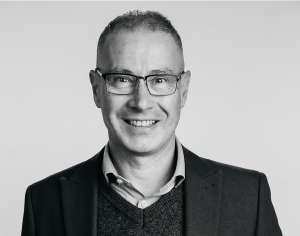
As our Founder and Chairman retires, he reflects on building the company, the milestones along the way, and the future ahead....

Explore inside a sustainable inhaler - do reusable designs really offer an eco-friendly solution, or is there more to consider than reusability....
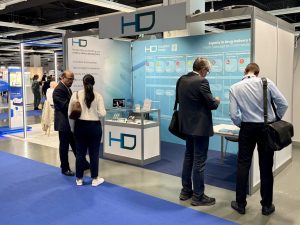
HD CEO Ash Ghadar shares drug delivery development insights from PDA Vienna....

Discover how Haughton Design's diverse team leverages their extensive experience to drive innovation in device development. Learn about our expertise and unique insights that ensure successful project...
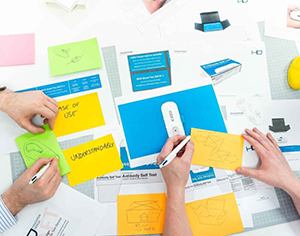
Explore how commercial constraints influence innovation in businesses. Discover whether budget limits, regulations, and market pressures drive creativity or stifle progress in today's competitive land...

HD strive to foster effective collaboration on all projects to push boundaries in innovation. We discuss how collaboration with the NHS can provide unique insight....
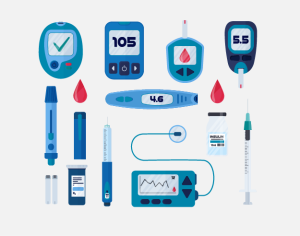
Why do we trust the accuracy of digital devices more than their non-digital counterparts? HD discuss the 'why' and how this improves device development....
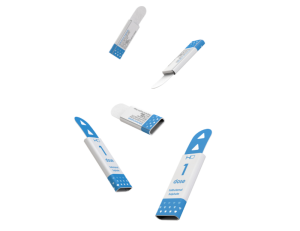
We discuss the whether the medical device industry can embrace paper as a viable alternative to plastic as we advance towards Net Zero....

What is the impact of emerging technologies on medical device and product development? Design Engineer, Dan Kirkham, discusses their applications....
We discuss transforming medical device development through the utilisation of interdisciplinary, and cross industry teams....


