
This was my first PDA conference, and I also had the chance to present a poster on behalf of Haughton Design. It focused on the key challenges and design process considerations involved in developing effective combination products. With the conference taking place at Croke Park, I had hoped I might come away understanding the rules of Gaelic football, but unfortunately, that remains a mystery.
The shift from intravenous to subcutaneous administration
One of the strongest themes across the conference was the move from intravenous (IV) to subcutaneous (SubQ) administration. This shift is being driven largely by patient convenience and the growing demand for treatments that can be delivered at home. But it is not just a technical challenge. It also brings together a wide range of stakeholder priorities, from patients and healthcare professionals to payers, providers and internal teams, and those priorities do not always align. Balancing them well will be essential for adoption and long-term commercial success.
High viscosity and high volume delivery
Alongside the move from IV to SubQ comes another big challenge: delivering more viscous formulations and larger volumes to support less frequent dosing. That is making combination products increasingly complex. The knock-on effects can be seen across formulation, device design, manufacturing and fill-finish, as well as patient adherence. At the same time, attitudes to injection time and pain perception are continuing to evolve, especially for handheld devices, while wearable and on-body systems are opening even more possibilities for delivery profiles.

The importance of early collaboration and co-development
Another clear takeaway was the importance of strong collaboration between pharma companies, CDMOs and suppliers. Bringing drug and device development together early, often in parallel, can help reduce delays, lower risk and improve overall product-market fit. For teams involved in design and development, it was a good reminder of the value of cross-functional collaboration from the outset.
Platform-based approaches remain important
While co-development is essential for novel therapies, platform-based approaches are still highly relevant for biosimilars and more established delivery needs. With more platform options now available, companies are increasingly using structured decision-making frameworks to narrow down the right choice and focus on stakeholder impact rather than feature complexity alone.
The expansion of digital and connected devices
Digital health technologies continue to strengthen patient support and improve adherence monitoring. Their value is especially clear in clinical trials, where they can support decentralisation and provide richer data capture. At the same time, regulatory requirements, cybersecurity considerations and the cost-benefit case for data management still present real barriers to wider commercial adoption. Of the options discussed, continuous monitoring solutions appeared to offer the greatest value for patients.
In summary
Overall, the conference was a valuable experience. As a design engineer, what stood out most to me was how consistently collaboration and stakeholder value, especially user value, were placed at the centre of the conversation. Sustainability was still very much on the agenda too, but often framed through the lens of delivering meaningful value to stakeholders.
Looking ahead, I am particularly interested in the growing role of simulation and mathematical modelling, and how better integration with device verification could help shorten development timelines and bring products to market faster.
Rob graduated from the Dyson School of Design Engineering at Imperial College London in 2021 with a Master’s in Design Engineering. Prior to joining HD, he worked in the automotive sector using state of the art 3D scanning and 3D printing techniques. He has a keen interest in human centred, interaction and experience design and has expertise in additive manufacturing, CAD, IoT, UI and mechatronics.
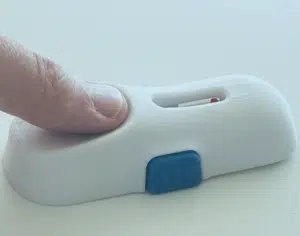
Early prototyping and user testing catch usability issues before costly mistakes, creating safer, smarter medical devices for users....
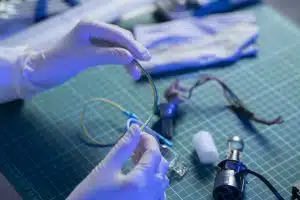
Early prototyping and user testing catch usability issues before costly mistakes, creating safer, smarter medical devices for users....

As we mark Love Your Lungs Week, we explore the latest trends shaping the inhalation industry. From advances in inhaler technology and sustainability initiatives to evolving patient needs and regulato...

Design Development Engineer, Holly Arrowsmith, shares an introduction to herself and how her first few months at Haughton Design have been....

As our newly appointed CEO enters his role, we ask him what he plans for the business in the future ahead....
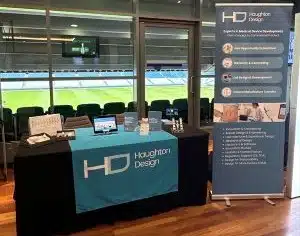
Reflection from PDA Miniverse 2026: the big themes shaping medical devices, combination products and connected health....

As our Founder and Chairman retires, he reflects on building the company, the milestones along the way, and the future ahead....
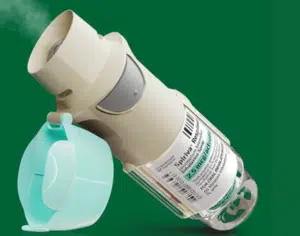
Explore inside a sustainable inhaler - do reusable designs really offer an eco-friendly solution, or is there more to consider than reusability....

HD CEO Ash Ghadar shares drug delivery development insights from PDA Vienna....

Discover how Haughton Design's diverse team leverages their extensive experience to drive innovation in device development. Learn about our expertise and unique insights that ensure successful project...
