The early stages of a project are often filled with exciting concepts and fresh thinking. Designers and engineers naturally want to keep exploring possibilities, refining solutions and pushing innovation further. It’s in their DNA.
However, what is rarely discussed in the design world is that device development exists within a commercial framework. Projects begin because businesses have objectives to achieve. They need to generate revenue, create competitive advantage, solve customer challenges or enter new markets.
While improving user experiences, advancing healthcare outcomes and solving complex technical problems are all important drivers, every project ultimately has to meet commercial expectations. Products must reach the market on time and on budget.. Development risks need to be managed… manufacturing viability and costs need to be thought through. Without a clear process, even the most innovative ideas can quickly become expensive delays and, ultimately, a problem too far.

An effective development process provides the structure and framework that allows creativity to flourish while ensuring projects remain commercially viable.
Prototype development and engineering activities need structure to minimise unnecessary design iterations, ensure products are robust and manufacturable, and reduce costly rework later in development.
Most importantly a well-defined process aligns everyone involved in the project.
When a process is simple, visual and easy to understand, stakeholders can quickly identify what work needs to be completed, who is responsible for each activity, the key milestones and delivery obligations, the projects costs and required investment, and the potential risks at every stage of the project.
This clarity enables teams to make better decisions, communicate more effectively and maintain momentum throughout development.
At Haughton Design, we’ve spent time, expertise and experience refining the development processes to ensure it’s both efficient and flexible.
Because our business is built around design, development and engineering, efficiency is critical. We continually review, refine and optimise our workflows to meet the needs of the industries we serve while ensuring compliance with all relevant regulations and standards.
Today, we operate a unique medical device development framework that provides a clear, structured pathway from initial concept through to commercialisation, or any stage in between.
While any device development organisation can benefit from reviewing, optimising and visualising its development process, doing so is not always straightforward. However, the long-term benefits, including greater efficiency, improved consistency and increased project success, far outweigh the initial investment of time and effort.
One of the key objectives behind Haughton Design’s workflow was simplicity.
From the very first client meeting through to project completion, our workflow enables every stakeholder to clearly understand what needs to happen and when.
Clients can instantly see:
Importantly, clients can engage with us at any point in the process.
Some organisations require support with only a specific development phase, while others partner with us from initial concept through to manufacture. Our process accommodates both approaches without sacrificing clarity or efficiency.
The same benefits extend internally. Project managers, designers and engineers all work from the same roadmap, ensuring everyone is aligned towards a common objective.
Combined with our ISO certified quality systems, this structured approach enables us to develop medical devices more efficiently, more robustly and in accordance with the relevant standards and regulations of which all our consultants are well-versed.
Stage 1: Discovery & Design Immersion
Every successful project begins with understanding.
Our Discovery & Design Immersion phase establishes the foundations for efficient product development by creating clear project inputs and reducing uncertainty from the outset.
This stage focuses on understanding every element, from user requirements to technical constraints to market opportunities for a product such as this. To do this we undertake workshops, interviews, assessments, research and investigations.
The outcome is a comprehensive Project Input Document that provides the direction needed for rapid and focused development.
Stage 2: Concept Design
This is where creativity takes centre stage.
By combining design thinking with engineering expertise and manufacturing knowledge, innovative concepts begin to emerge and valuable intellectual property can be created.
Ideas are initially explored through sketches, visualisations and collaborative workshops before being refined into increasingly detailed concepts through to proof of principle prototypes and verification planning.
The goal here is not simply to create attractive concepts, but to develop solutions that are feasible, manufacturable and capable of delivering meaningful market advantage.
Stage 3: Feasibility Studies
Innovation is exciting. But before significant investment is made, feasibility must be established.
The feasibility phase helps reduce project risk by validating technical, commercial and manufacturing assumptions early in the development process. This stage often includes supplier identification, cost analysis through to design and prototype development and risk assessment.
By answering critical questions before full-scale development begins, organisations can make informed investment decisions and avoid costly surprises further down the line.
The misconception that process restricts creativity couldn’t be further from the truth.
The best development processes don’t suppress innovation, they create an environment where innovation can thrive.
A clear, visual and structured workflow provides the confidence, direction and accountability needed to transform great ideas into successful products.
At Haughton Design, we’ve found that combining creativity with a robust development process delivers the best of both worlds.. innovative thinking that remains commercially focused, technically achievable and ready for market success.
Because ultimately, the goal isn’t just to generate ideas. It’s to turn those ideas into products that make a real difference.
Mark ensures that projects are delivered on time and are suitably resourced to guarantee quality of output. Mark is heavily involved in our design services, having a wealth of experience in healthcare devices, trainer devices, IVD’s, and inhalation.
Mark holds a Bachelor’s Degree in Product Design along with 20 years’ experience working on a wide range of design projects.
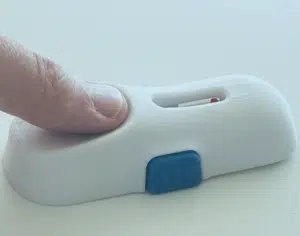
Early prototyping and user testing catch usability issues before costly mistakes, creating safer, smarter medical devices for users....
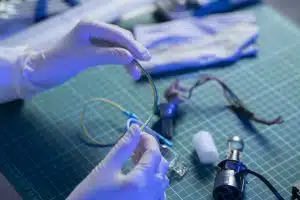
Early prototyping and user testing catch usability issues before costly mistakes, creating safer, smarter medical devices for users....
As we mark Love Your Lungs Week, we explore the latest trends shaping the inhalation industry. From advances in inhaler technology and sustainability initiatives to evolving patient needs and regulato...

Design Development Engineer, Holly Arrowsmith, shares an introduction to herself and how her first few months at Haughton Design have been....
As our newly appointed CEO enters his role, we ask him what he plans for the business in the future ahead....
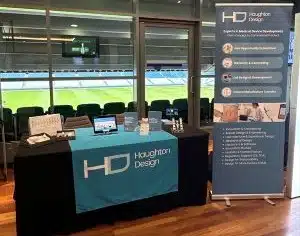
Reflection from PDA Miniverse 2026: the big themes shaping medical devices, combination products and connected health....
As our Founder and Chairman retires, he reflects on building the company, the milestones along the way, and the future ahead....
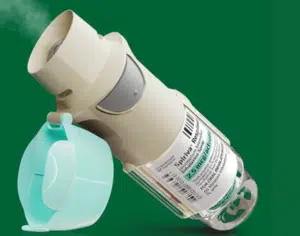
Explore inside a sustainable inhaler - do reusable designs really offer an eco-friendly solution, or is there more to consider than reusability....
HD CEO Ash Ghadar shares drug delivery development insights from PDA Vienna....
Discover how Haughton Design's diverse team leverages their extensive experience to drive innovation in device development. Learn about our expertise and unique insights that ensure successful project...